What are your goals at EPS?
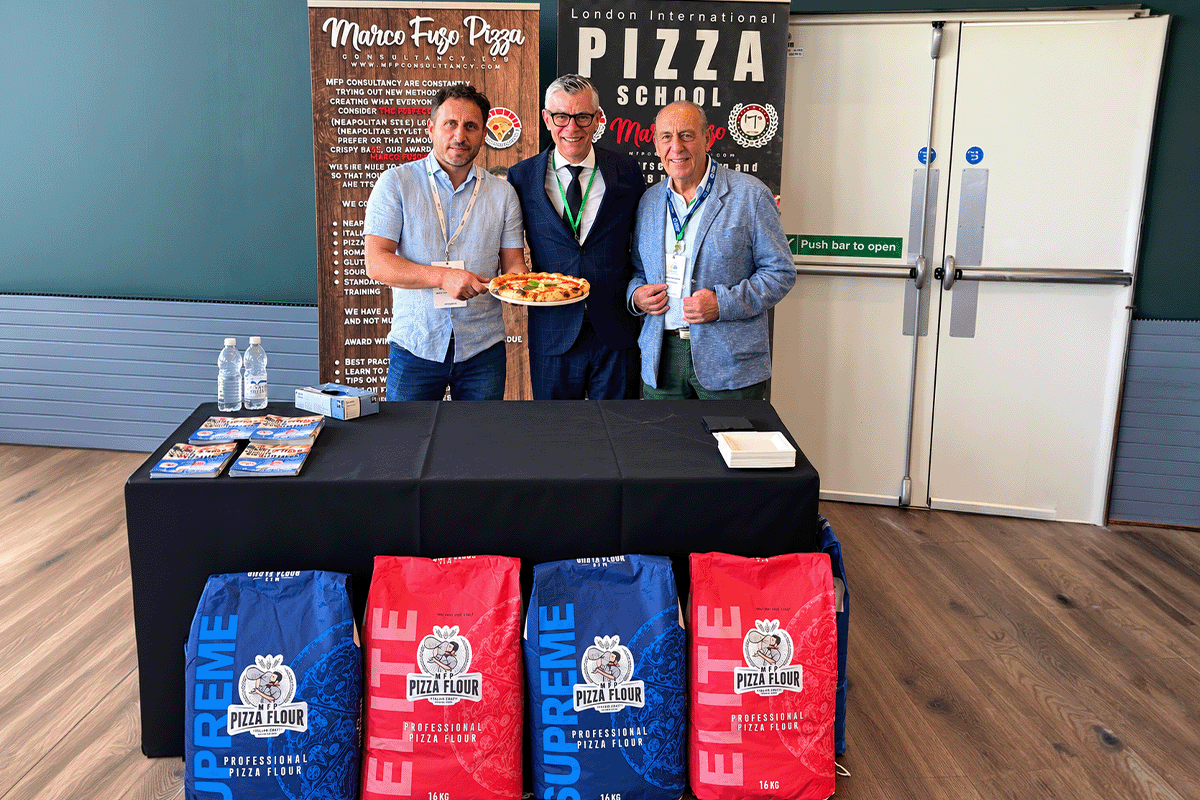
It’s always exciting to be part of EPS. This is our fourth year – and we can’t wait to be back. One of the most valuable aspects is meeting people face-to-face. It gives us the opportunity to reconnect with customers who have chosen Marco Fuso Professional Pizza Flour, listen to their experiences and, of course, meet new operators and professionals discovering us for the first time.
We are still a relatively young brand but we’ve built something consistent, dynamic and designed around the real needs of professional pizza makers.
This year is particularly exciting because we are introducing our new 1.5kg retail pack. Our ambition is to take the same professional-quality flour used by pizzerias and make it accessible in the home, with the longer-term goal of seeing MFP Pizza Flour on UK supermarket shelves. We believe there is a real opportunity there.
How is your business developing?
What still excites me most is the story behind the brand. The original idea of creating a professional pizza flour made in the UK came to me during the pandemic. Seeing where we are today makes me incredibly proud.
A very important part of that journey has been our relationship with C. Carnevale. The partnership has continued to grow stronger and works both ways. Many existing Carnevale customers have chosen to use MFP Pizza Flour, while at the same time our brand has introduced people to them.
Working with a business that recently celebrated 60 years is a real honour. There is a huge amount of experience behind Carnevale, while MFP brings something young, specialist and very focused on today’s pizza market – that combination works extremely well.
Looking ahead, the plan is to continue developing the range year by year, introducing products and different flours that deliver practical solutions for everyday dough-making.
MFP started with my experience as a pizza chef, and that will remain at the heart of every product we develop: if a new flour doesn’t offer something genuinely useful to the pizza maker, there is no reason for us to create it.
What’s special about your range?
Between the two flours – Supreme & Elite – we can cover an enormous range of styles and dough-making methods.
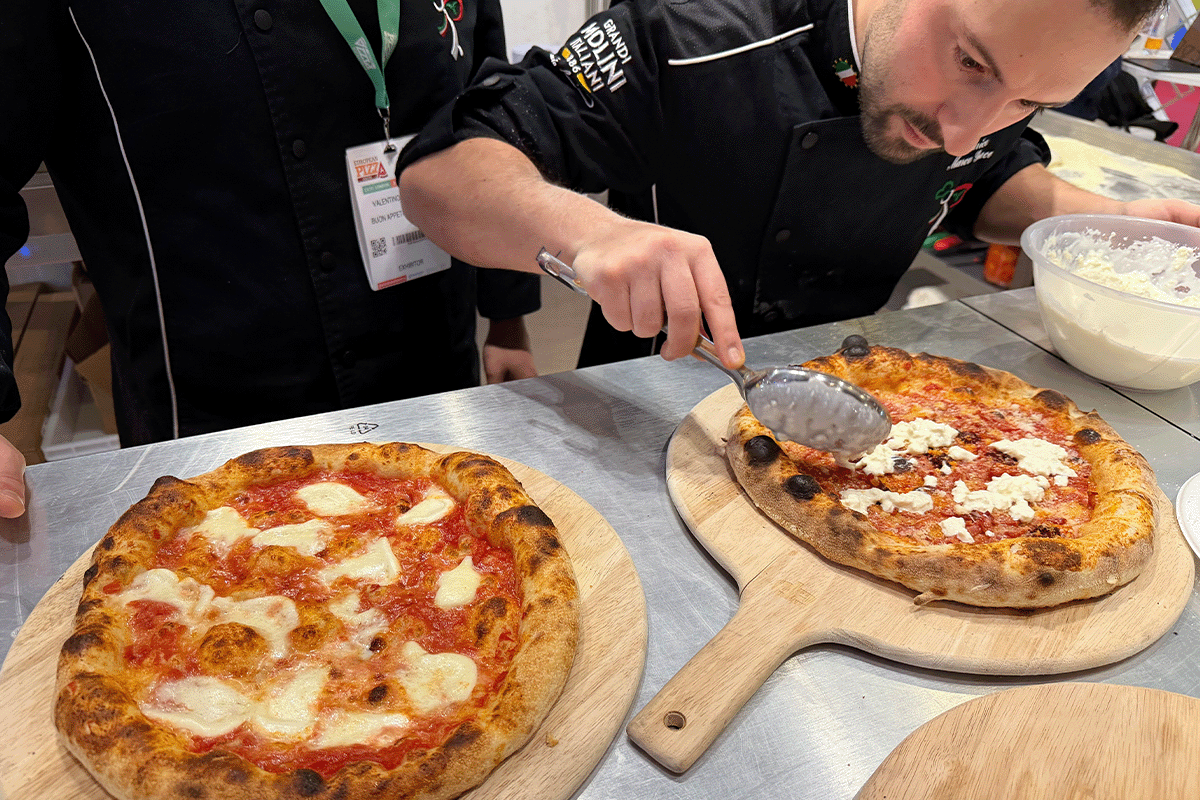
For an Italian, it isn’t about one round pizza. We have so many different traditions and techniques: Neapolitan, Roman-style with a crispier base, pizza in teglia baked in trays, pizza alla pala, contemporary and others. Each one asks something different from the dough and therefore from the flour.
When I developed Supreme and Elite together with the miller, the objective was to carefully select the right grains and create two professional flours that could give pizza makers that versatility.
Supreme works beautifully for traditional Neapolitan pizza as well as Roman-style and crispier-base pizzas. It gives the dough that silky, smooth workability.
Elite gives us another level of strength. It has a higher protein content and excellent absorption, making it particularly suitable for contemporary options, biga preferments, long fermentation and high-hydration doughs. With the correct mixing process, Elite can comfortably work at around 75–80% hydration, and it is also ideal for operators looking for a more developed, puffier crust or fermentation extending beyond 48 hours.
So, although we technically have two flours, in reality they give a pizza chef many possibilities. That was always the idea: not to tell a chef what style of pizza to make but to give them the right tools to create what they want.
What are the biggest challenges?
Being on both sides of the industry has been valuable for me. I work with pizza businesses through my flour, training and consultancy but I’m also a restaurant operator myself, so I experience the same challenges as our customers.
It’s unquestionably a difficult period for hospitality. The cost of running a restaurant has increased enormously. Ingredients, energy, labour, transport and shipping have all become more expensive, and sometimes costs seem to change almost overnight.
At the same time, particularly in a city like London, the pizza market has become incredibly competitive, with so many good operators. You have to be consistent, with great ingredients, good service and a strong identity – but the key is to give customers a reason to choose you rather than somebody else. Operators need to keep evolving, looking at what the competition is doing and finding something genuinely different.
These periods also test you as an entrepreneur. In Italian we say ‘stringere i denti’ – sometimes you have to dig deep, stay resilient and keep pushing forward. Hospitality has always had its challenges, and I believe those that focus on on quality, consistency, innovation and their customers will be in the strongest position when the market improves.
Who do you work with – and which partnerships are most important?
The flour will always be the jewel of the MFP brand for me because that is where this journey started. But one exciting development is our frozen dough ball, made with MFP Pizza Flour and a biga preferment.
I spent almost two years developing it, as I wanted to challenge the traditional perception of frozen dough. I didn’t want a product that becomes weak after a few hours or behaves like a typical frozen dough ball. My objective was to create something with the flavour, texture, strength and performance of a professionally prepared fresh dough.
The response from operators has been extremely encouraging and more businesses are starting to use it. Once properly prepared and baked – whether in a wood-fired or electric oven – it it produces a pizza that I am extremely proud to put my name behind.
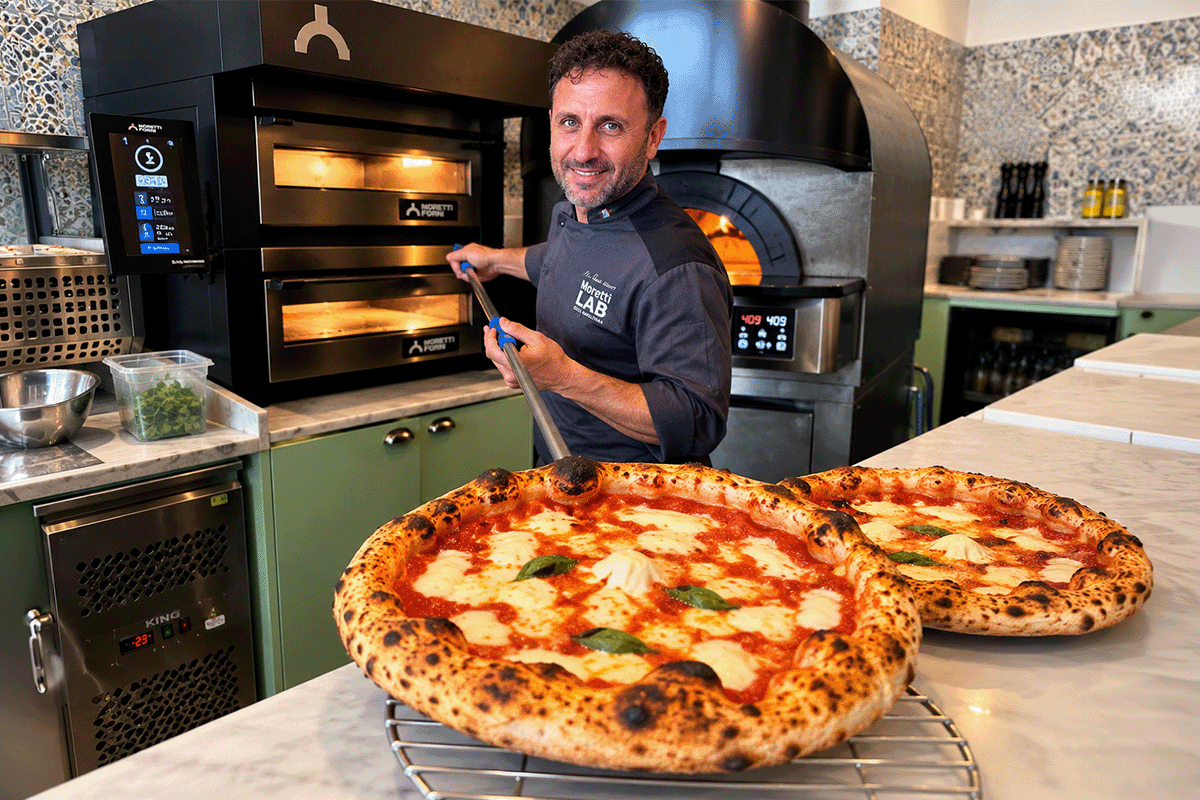
In terms of partnerships, C. Carnevale goes far beyond a normal commercial relationship, having built a genuine friendship and trust. I’m also proud of our work with Moretti Forni ovens – their technology and performance are exceptional. Sunmix are also important, because the mixer is a vital part of producing great dough.
I always tell operators that there are three things I would never compromise on: your flour, your mixer and your oven. The flour gives you the foundation, the mixer is where the dough is created, and the oven is where all that work is finally transformed into the pizza you serve to your customer.
Get those elements right, combine them with knowledge and consistency, and you are halfway towards producing a great pizza.
What’s next for you?
I’m never very good at standing still! There are always new projects, collaborations and ideas developing.
My main focus in London continues to be Renaissance Pizzeria. Whenever I’m in the capital, that’s where you will find me. I still work there every weekend, because I want to remain close the restaurant, the team and customers.
At the same time, I’ve restarted my international work, collaborating with new companies on different projects, while continuing to develop the MFP flour range and explore products for professional pizza makers.
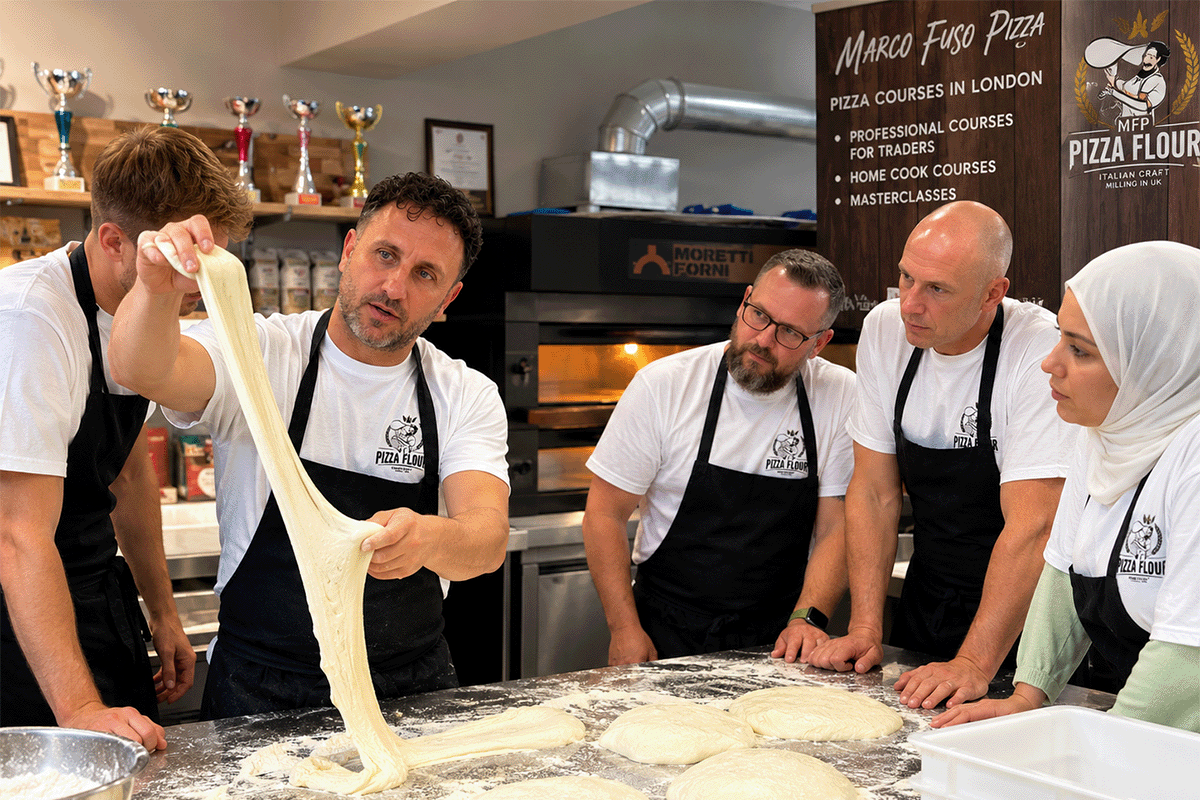
But education remains a huge part of who I am. I love running my masterclasses because they give me the opportunity to meet professionals, exchange knowledge and experiences, and keep learning from the industry.
We also have exciting news for the end of this year, with the launch of a new pizza school in Glasgow. And Renaissance will become the official London home of my pizza courses. I’ll be running professional two-day courses for traders there, alongside one-day Saturday pizza courses for home cooks twice a month.
So, 2027 is about bringing everything together: the restaurant, education, international work, partnerships and, of course, continuing to grow MFP Pizza Flour.